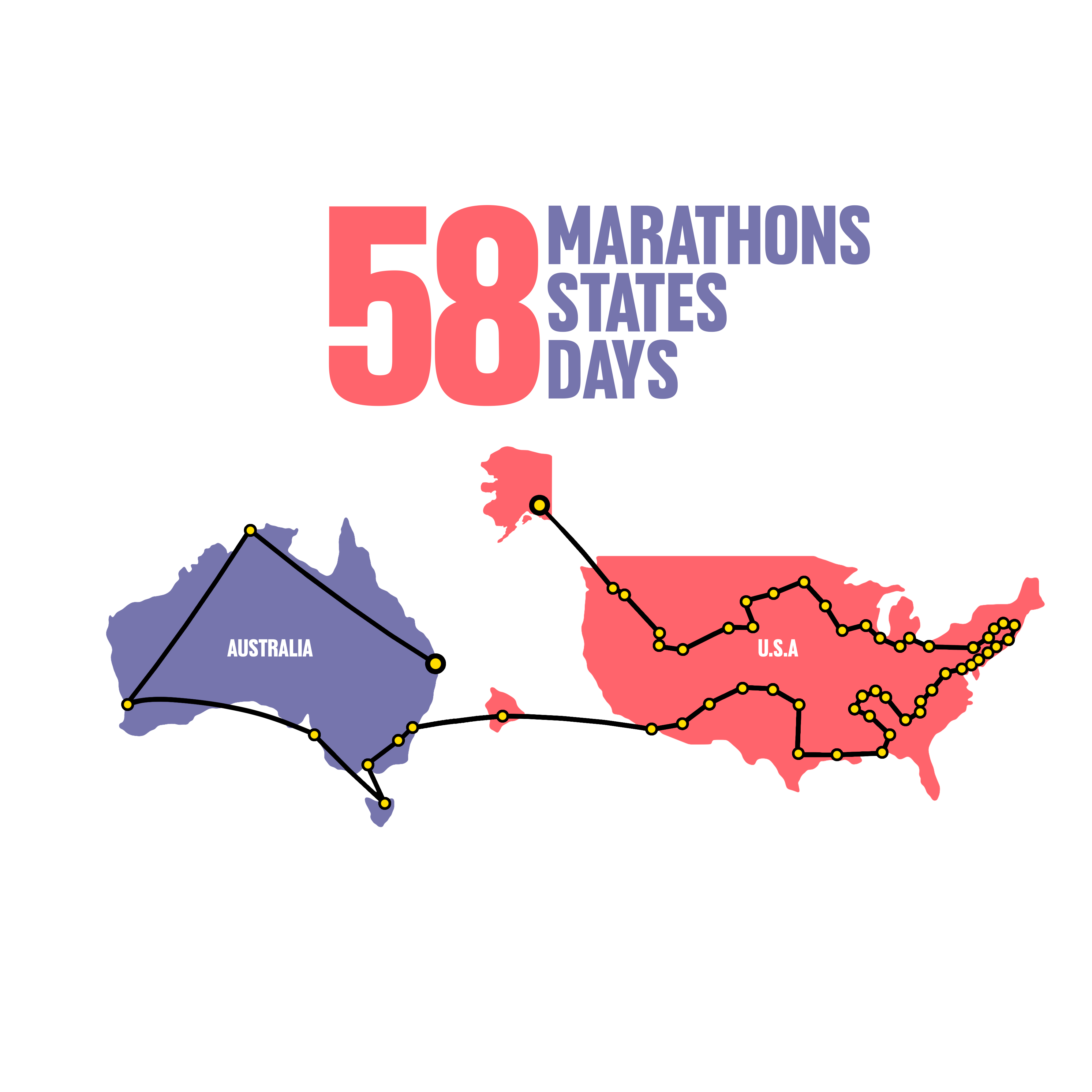
When I finished running 58 marathons in 58 consecutive days across the United States and Australia in winter, the first question people asked wasn't about the cold, the logistics, or the mental challenge. It was: "How did you train for that?"
The honest answer surprised most of them: I trained for one marathon, not fifty.
This isn't a deflection. It's the entire strategy that made the attempt possible. Because if you try to train for 50 marathons in 50 days the way most people think you should, you'll arrive at the start line already broken.
This article explains what 18 weeks of training for the 50 states marathon challenge actually looked like, what worked, what didn't, and what you need to know if you're considering attempting consecutive marathons yourself.
My Running Background Before Training Began
Before I committed to attempting 50 marathons in 50 consecutive days, my endurance resume was thin.
I'd run exactly four marathons in my life. My weekly mileage fluctuated inconsistently between 50 kilometers and 80 kilometers. I came from a CrossFit and rugby background, not distance running. I'd completed 30 rowing marathons in 30 days years earlier, which gave me mental confidence in multi-day endurance, but running creates different physical stress than rowing.
I'd also completed some 12-hour fitness challenges, but those were strength-focused events, not aerobic endurance tests.
When I decided to attempt the 50 states marathon challenge in winter, I had just finished the Nashville Marathon. I was fit, but not consecutively-fit. There's a difference.
That's when I hired Dean Wicks, an endurance running coach based in Brisbane, Australia, to guide my preparation.
Dean Wicks' Training Philosophy: Build for One, Not Fifty-Eight
Dean Wicks (Rise Coaching) reviewed my training data and immediately identified the core issue: inconsistent volume.
His philosophy surprised me. He said: "We're going to train you for one marathon, not 58. If you try to train for 58 marathons, you'll essentially start the challenge before the challenge begins. You'll arrive fatigued, overtrained, and injured."
His reasoning was simple: if I could run one marathon comfortably, my ability to continue backing it up would come down to recovery, fueling, and mental discipline, not fitness alone.
Dean's primary goal wasn't speed or intensity. It was not getting me injured before January 20, 2025, when I'd start in Alaska.
He stripped my training back to basics: build consistent volume, avoid intensity spikes, and use the first few weeks of the actual challenge as part of the training progression.
This was counterintuitive. I wanted to do back-to-back marathons in training. I wanted to simulate the grind. Dean disagreed.
But he also understood the psychological value of testing myself, so we compromised: I'd do one back-to-back marathon attempt early in the process to understand what the next-day fatigue would feel like, then trust his progression from there.
The Back-to-Back Marathon Test (Before Formal Training Started)
Before officially starting the 18-week training block with Dean, I insisted on running back-to-back marathons to answer one question: What does it feel like to wake up and run again the next day?
I completed this test in Nashville, Tennessee, where I was living at the time.
- Day 1: 4 hours
- Day 2: 4 hours 20 minutes
The second day felt brutally heavy. My legs weren't sore in the traditional sense. They were just dense, like trying to move through wet concrete. The lesson wasn't about pace or distance. It was about fueling.
I hadn't eaten gels or hydrated properly during the first marathon, which meant I started Day 2 already depleted. Dean's response stuck with me: "The reason it's important to fuel yourself properly during every marathon is because you're preparing yourself for the following day's marathon."
That single insight shifted my entire approach. Every training session became about tomorrow, not today.
After this test, I committed fully to Dean's 18-week progression.
The 18-Week Training Block: Volume Progression
Training officially began in August/September 2024. I had roughly 18 weeks before the January 20, 2025 start date in Alaska.
Week 1: 50 kilometers
Dean started me at a conservative baseline. The focus was establishing consistency, not pushing limits.
Weeks 2-12: Incremental Build
Every week, volume increased slightly. We weren't chasing dramatic jumps. We were conditioning my body to accumulate miles without breaking down.
Dean programmed one intensity session per week, usually a tempo or threshold effort, but the bulk of training was time on legs at conversational pace.
Weeks 13-17: Peak Volume (100+ km weeks)
I held 100+ kilometer weeks for approximately six weeks. These weeks felt heavy, constantly. My legs never felt fresh. That was intentional.
Dean wanted me to get comfortable with the feeling of running on fatigued legs, because that would be my reality for two months straight during the challenge.
Week 18: 140 kilometers (Peak Week)
My highest mileage week came in early January 2025, during my final week before the taper. I completed 140 kilometers that week while in Sayulita, Mexico, attending a wedding.
This wasn't about fitness anymore. It was about proving to myself I could handle volume under less-than-ideal conditions.
Final 10 Days: Taper
Dean tapered my volume slightly in the final 10 days. At this stage, fitness gains were marginal. The goal was arriving in Alaska with fresh legs, not exhausted ones.
Training While Traveling: The Chaos Factor
One detail most people don't know: I trained while traveling constantly across the United States.
My wife, Amy, is a member of ARIA award-winning pop group Sheppard. During the 18-week training block, I was on tour with the band, moving between cities, sound checks, and performances.
This meant:
- Running in unfamiliar cities
- Training in hotel gyms
- Completing long runs in random parking lots or along highways
- Managing time zones, late nights, and irregular schedules
There were mornings I'd finish a show at midnight, sleep a few hours, wake at 6 a.m., and complete a 20-kilometer run before the band's next travel leg.
This chaos wasn't ideal, but it became valuable preparation. Because during the 50 states marathon challenge, chaos would be the baseline.
Dean's programming accounted for this. He built flexibility into the plan, trusting me to execute the sessions regardless of location.
Back-to-Back Long Runs: The Secret to Consecutive Marathon Adaptation
While I only ran back-to-back marathons once during the training block, Dean programmed frequent back-to-back long run days.
These looked like:
- Saturday: 35-kilometer run
- Sunday: 30-kilometer run
The purpose wasn't simulating marathon distance. It was conditioning my body to recover quickly and start moving again on tired legs.
This progressive loading taught my nervous system, connective tissue, and muscles how to function under cumulative fatigue without the full stress of 42.2 kilometers daily.
By the time I reached Alaska, backing up wasn't a shock to my system. It was familiar.
Nutrition Training: From 2,200 to 6,000+ Calories Per Day
Most people focus on mileage when training for consecutive marathons. Dean made me focus equally on nutrition.
When I started the training block, I was eating roughly 2,200 calories per day. Dean explained that during the challenge, I'd need 6,000-8,000 calories daily just to maintain body weight.
You can't jump from 2,200 to 6,000 overnight without severe digestive distress. So we built a 16-week calorie progression.
The Progression
I increased my daily intake incrementally every week, roughly adding 200-250 calories per week through:
- Larger meals
- Strategic snacking
- Protein shakes
- Meal replacement shakes
By the time I reached Mexico in early January 2025, I was comfortably consuming 5,000+ calories daily without feeling overfull or sluggish.
Fueling During Runs
I tested multiple gel brands during training. Most failed. They either upset my stomach, created sticky residue, or didn't provide sustained energy.
I settled on Precision Fuel & Hydration 90-gram gels. They were easy to carry, didn't leak, and my gut tolerated them well. I'd consume four gels during each marathon (one every 10 kilometers), totaling 360 grams of carbohydrate per run.
Dean's advice was clear: "You're not eating for today's marathon. You're eating for tomorrow's."
This mindset shift was critical. I wasn't fueling to finish today's run. I was fueling to start tomorrow's.
What Actually Prepared Me: The Top 3 Training Elements
Looking back, three things from training actually mattered most:
1. The Back-to-Back Marathon Test
Running consecutive marathons early in the process gave me a reference point. I knew what next-day fatigue felt like. I knew how to warm up stiff legs. I knew the mental challenge of starting when your body begs you to stop.
This wasn't about fitness. It was about removing the unknown.
2. Building Volume Properly
Dean's incremental volume progression kept me injury-free. We didn't chase intensity. We didn't rush adaptation. We built time on legs consistently, week after week.
By the time I reached 100+ kilometer weeks, my body had adapted to the cumulative load. I wasn't constantly managing pain or inflammation.
3. Dialing In Nutrition
Pre-training, I didn't fuel well before, during, or after sessions. Dean made me treat every training run as practice for the challenge.
I learned:
- What to eat two hours before running
- How to fuel during the run
- What to eat within 30 minutes post-run
This protocol became automatic, which meant during the actual challenge, I didn't have to think about it.
What Was a Waste of Time: Training Mistakes I Made
Not everything I did during training was valuable.
1. Bodybuilding-Style Strength Training
Early in the block, I tried maintaining my traditional bodybuilding muscle isolation work. It was pointless.
With high running volume, my body needed rest, not extra hypertrophy stimulus. I eventually stripped strength work down to mobility, core stability, and light functional movements.
2. Shoe Obsession
People kept telling me I needed to try different running shoes, test various brands, and find the "perfect" pair for consecutive marathons.
I wasted time and mental energy on this. Shoes matter, but not as much as people think. I should have trusted what worked and moved on.
3. Overthinking Intensity
I worried early on that I wasn't running fast enough in training. I thought I needed more tempo sessions, more interval work, more speed.
Dean was right: intensity wasn't the limiter. Durability was.
Recovery Protocol: What I Did Daily
Training volume only works if recovery is equally disciplined.
Here's what I did throughout the 18-week block:
Daily:
- Stretching (15-20 minutes post-run)
- Muscle scraping (calves and feet)
- Compression sleeves
Weekly:
- Physio with Kathleen Seagar (my sister-in-law): 1 hour of dry needling and deep tissue work
- Sauna sessions
- Ice baths
Monthly:
- Massage therapy (inconsistent, roughly once a month at random locations)
Throughout Entire Block:
- No alcohol (14 months total, from decision to finish line)
I believed recovery should match training effort, so I invested in it heavily.
The weekly physio sessions were non-negotiable. Kathleen kept my tissue healthy, addressed minor tightness before it became injury, and gave me objective feedback on how my body was responding to load.
Mental Preparation: No Visualization, Just Belief
People often ask if I did mental training or visualization for the 50 states marathon challenge.
I didn't.
My mental preparation came from:
- Rowing 30 marathons in 30 days years earlier: This built confidence that I could handle multi-day endurance.
- Training alone consistently: Most of my runs were solo. I didn't always listen to music or podcasts. I practiced being alone with my thoughts, because I knew that's where the real battle would happen.
- Daily focus on the goal: Between training, sponsorship outreach, and logistics planning, the challenge was front-of-mind every single day for 14 months. This constant exposure built belief.
By the time I reached Mexico in early January 2025, people would ask: "Do you think you can really do it?"
That question didn't make sense to me anymore. I wasn't hoping I could do it. I believed I would.
The Run That Sealed My Belief
There was one specific training run where I thought: "Okay, I can actually do this."
It was a 35-kilometer run in Sayulita, Mexico, during my peak 140-kilometer week.
The conditions were terrible:
- Hot and humid
- Boring road (running up and down the same stretch)
- Noisy traffic
- Fatigued legs (I'd already run 105 kilometers that week)
I wanted to quit multiple times. But I didn't. I just kept putting one foot in front of the other.
When I finished, I felt invincible. Not because the run was fast or impressive, but because I'd proven to myself I could continue when everything in me wanted to stop.
That's what consecutive marathon training is really about: building the muscle that keeps you moving when quitting feels logical.
The Single Biggest Training Mistake People Make
If someone asked me what the single biggest mistake is when training for 50 marathons in 50 days, it's this:
Not respecting the challenge.
Ultra-endurance events have become trendy. People rush into them without building the foundation their body needs to handle continuous stress.
They think:
- "I've run a few marathons, I can handle this."
- "I'll just push through the pain."
- "Intensity will carry me."
All of these assumptions are wrong.
Your body needs time to develop:
- Tissue resilience
- Aerobic base
- Recovery efficiency
- Fueling tolerance
If you try to compress this adaptation, your body will break down. It's not a question of if, it's when.
The second biggest mistake is adding too much intensity. Consecutive marathon training isn't about running fast. It's about running repeatedly without breaking.
Minimum Requirements: What You Need Before Starting a Training Block
If someone came to me wanting to attempt 50 marathons in 50 days, here's what I'd tell them they need before even beginning a formal training block:
Running Experience
- At least one completed marathon
- Minimum 2 years of consistent running (not sporadic training)
- Base weekly mileage of 50+ kilometers maintained for at least 6 months
Time Commitment
- Ability to train 20+ hours per week
- This includes running, strength work, and recovery protocols
- If you can't commit this time, you're not ready
Physical Foundation
- No current injuries
- Strong aerobic base (able to run 2+ hours comfortably)
- Body weight stable and healthy
Mental Foundation
- Experience with discomfort (previous endurance events, challenges, or training blocks)
- Ability to train alone consistently
- Willingness to prioritize the goal above comfort
If these foundations aren't in place, build them first. Don't rush into consecutive marathon training.
About Lachlan Stuart
Lachlan Stuart is an endurance athlete, keynote speaker, and men's performance coach based in Brisbane, Australia. In 2025, he became the first person in history to complete the 50 states marathon challenge consecutively in winter, running 58 marathons in 58 days across the United States and Australia. He raised over $160,000 for the Mental Awareness Foundation and documented the journey through his speaking, writing, and content creation.
Lachlan works with men to build clarity, discipline, and purpose through his Life Performance Framework (Core 4: Strong Body, Calm Mind, Clear Purpose, Confident Life). His training approach emphasizes sustainable systems over short-term intensity.
Frequently Asked Questions
How long should I train for 50 marathons in 50 days?
A minimum 16-18 week training block is recommended if you already have a strong running base. If you're new to distance running, spend 6-12 months building aerobic capacity first, then begin a formal consecutive marathon training program.
Do I need to run back-to-back marathons in training?
Not necessarily. One back-to-back marathon attempt can be valuable psychologically, but consistent back-to-back long runs (25-35 kilometers) are more sustainable for adaptation without excessive injury risk.
How much should I run per week when training for consecutive marathons?
Build progressively from 50 kilometers to 100+ kilometers per week. Peak volume should reach 120-140 kilometers in the final weeks before tapering. Quality matters more than total volume.
What should I eat when training for 50 marathons in 50 days?
Progressively increase daily calorie intake from your baseline to 5,000-6,000+ calories over 16 weeks. Focus on whole foods, strategic snacking, and fueling immediately post-training. Practice consuming 300-400 grams of carbohydrate during long runs.
How do I prevent injury during consecutive marathon training?
Build volume incrementally (10% increase per week maximum), include deload weeks every 4-5 weeks, prioritize recovery (sleep, physio, mobility), and avoid excessive intensity. Most injuries come from doing too much too soon.
Should I do speed work when training for 50 marathons in 50 days?
Limited intensity is beneficial (one tempo or threshold session per week), but the majority of training should focus on time on legs at conversational pace. Consecutive marathon success depends on durability, not speed.
How important is recovery during the training block?
Recovery is as important as the training itself. Include daily stretching, weekly physio or massage, regular ice baths or sauna, and prioritize 8+ hours of sleep nightly. Without disciplined recovery, volume will break you down.
Can I train for consecutive marathons while working full-time?
It's extremely difficult. Consecutive marathon training requires 15-20+ hours per week when you include running, recovery, and fueling. Most people who attempt the 50 states marathon challenge take extended time off work or build flexible schedules.
What's the difference between training for one marathon vs 50 consecutive marathons?
Training for one marathon focuses on race-day performance. Training for 50 consecutive marathons focuses on daily repeatability, recovery efficiency, and fueling tolerance. The physical preparation is less intense but more sustained.
Do I need a coach to train for 50 marathons in 50 days?
Not strictly required, but highly recommended. A qualified endurance coach can design progressive loading, monitor fatigue, adjust volume based on response, and prevent overtraining. The margin for error is small in consecutive marathon preparation.
What running shoes should I use for consecutive marathon training?
Use shoes that work for your biomechanics and have proven comfortable over long distances. Avoid experimenting with new models close to your start date. Have 2-3 pairs in rotation to vary pressure points and extend shoe life.
How do I know if I'm ready to attempt 50 marathons in 50 days?
You're ready when you can: (1) Run a marathon comfortably, (2) Recover within 24 hours and run again, (3) Maintain 100+ kilometer weeks without injury, (4) Fuel 5,000+ calories daily without digestive distress, and (5) Mentally commit to discomfort for 50+ consecutive days.
Final Thoughts: Training Is Just the Beginning
Training for 50 marathons in 50 days isn't about logging perfect weeks or hitting specific paces. It's about building a body and mind that can endure relentless repetition without breaking.
Dean Wicks' philosophy was simple: train for one marathon, not fifty-eight. Build volume progressively. Avoid injury. Trust the process.
The 18-week progression from 50 kilometers to 140 kilometers per week worked because it respected adaptation. The back-to-back long runs conditioned my body to recover quickly. The nutrition progression taught my gut to process massive calorie loads. The recovery protocols kept tissue healthy.
But training was just the foundation. The real test came on January 20, 2025, when I stepped onto frozen Alaskan roads and started running.
If you're considering attempting the 50 states marathon challenge, or any consecutive marathon format, respect the preparation. Don't rush it. Build the foundation properly.
Because when the challenge begins, there's no room for shortcuts.
---
Ready to Build Your Own Foundation?
Whether you're training for an endurance challenge or simply want to perform better in life, it starts with knowing where you stand.
Take the free Own Your Week Scorecard to assess your Strong Body, Calm Mind, Clear Purpose, and Confident Life and get clarity on your next steps.
---
Related: