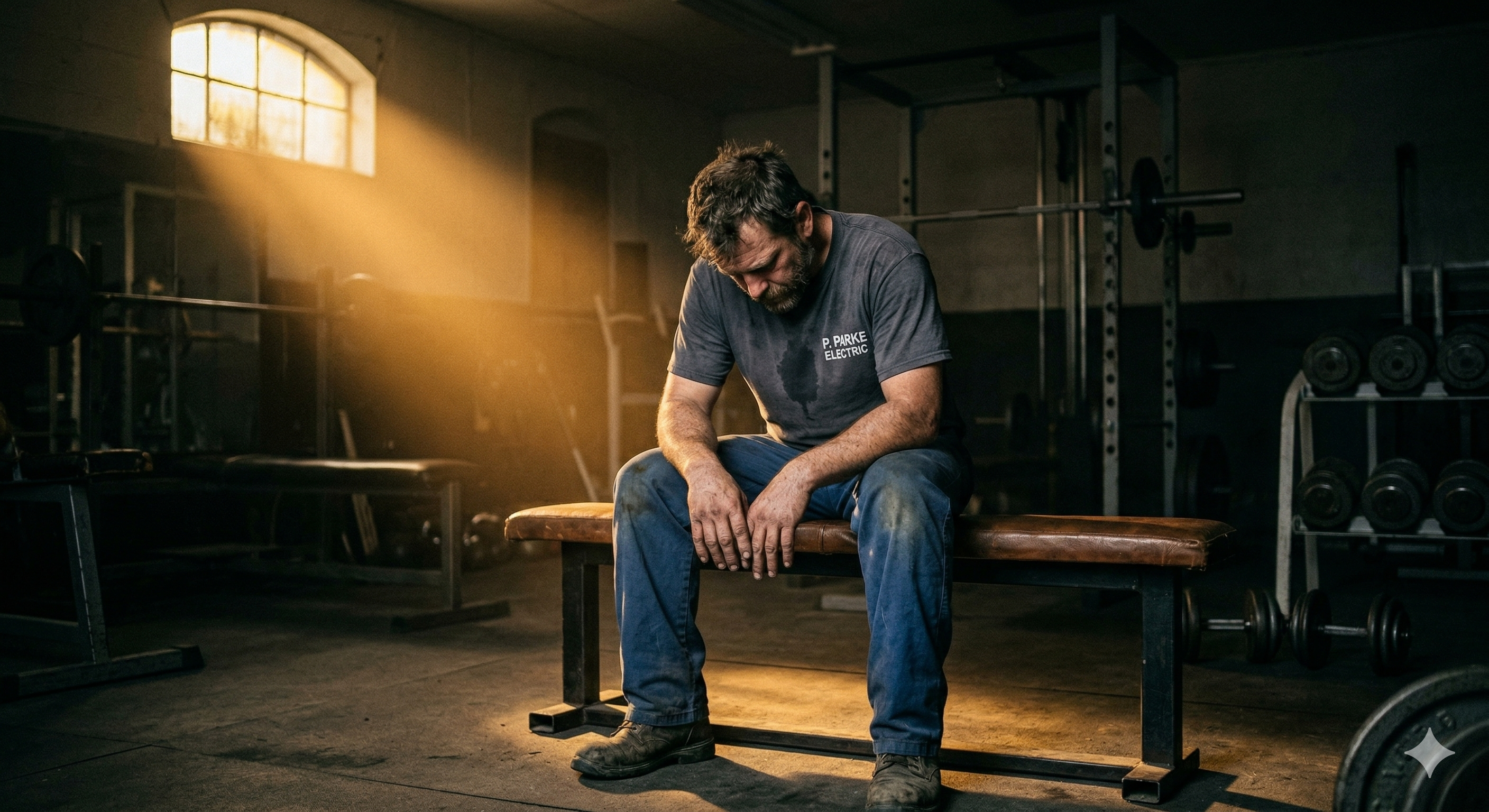
# Rehab to Redemption: Joe Parke's Story of Addiction, Recovery, and Starting Again
Content note: This episode discusses addiction, substance abuse, and suicidal ideation. If you or someone you know is struggling, please contact Lifeline on 13 11 14.
Joe Parke and I grew up together. Same area, same parties, same circles. When I had him on the podcast, he'd been sober for six months after two months in a rehab facility in Maleny. This conversation was one of the rawest I've ever recorded.
Joe's story matters because it's not rare. It's common. The drinking, the gambling, the cocaine, the loneliness underneath all of it. The only uncommon part is that he did something about it at 28.
*Episode 283 of Man That Can with Lachlan Stuart*
---
Listen to Episode 283 of Man That Can with Lachlan Stuart:
---
"Your Spirit's Broken"
Joe was living in West End, Brisbane. Working as an electrician, earning decent money, and spending every night the same way. Bottle of whiskey on the way home. Pokies in the gaming lounge underneath his apartment. Cocaine when the weekend came. Then during the week. Then most days.
He described the pokies as almost a drug in themselves. He'd be sitting at work hearing the feature bell go off in his head. That's how deep the hooks were. The machines are designed to do exactly that.
When he finally got into rehab, his therapist Catherine, an Irish woman at the Palladium facility, looked at him in their first session and said four words: your spirit's broken.
The root wasn't the substances. It was loneliness and a complete loss of purpose. Joe had always been a dreamer. He knew he was capable of more than what he was doing. But instead of facing that gap, he filled it. Whiskey, gambling, cocaine, women. Anything to avoid sitting alone with the question of who he actually was.
He described himself as a "pretender." Different person in every group. Wearing whatever mask got him accepted. And then going home to sit with the version of himself he couldn't stand being around.
Two Mates Who Gave a Damn
Joe thought he was on his own. He wasn't.
Two workmates in Brisbane had been watching him slip for weeks. One night Joe called one of them, blind drunk, crying, barely coherent. The mate came round, picked him up, took him back to his own apartment, and wouldn't leave him alone because they were in a high-rise.
The next day, he called Joe's boss. Within 48 hours, the boss had organised a spot at a rehab facility in Maleny. Joe was in.
Looking back, Joe said he'd been telling himself and everyone else he was fine. He wasn't lying on purpose. The chaos had become so normal that he genuinely didn't recognise how far he'd fallen. His therapist later helped him understand that the self-destructive behaviour was a way of forcing someone else to intervene, because he couldn't bring himself to just say: I'm not happy and I need help.
The blokes who stepped in didn't wait for permission. They saw a mate drowning and pulled him out. Joe said it simply: "I thought I was on my own. But those two boys loved me like brothers."
What Rehab Actually Looked Like
Joe spent two months at the Palladium in Maleny, a holistic facility (not 12-step). The structure was built around the things that most men neglect: movement, nutrition, therapy, creativity, and rest.
Every morning started with group exercise. Yoga, boxing, swimming, gym sessions. Then healthy meals prepared by two cooks who Joe reckoned were exceptional. Afternoons were either two-hour therapy sessions, personal training, or massage. Some days were left deliberately quiet so the men could learn to sit with boredom without reaching for something destructive.
That last part was critical. Boredom was Joe's biggest trigger. Saturday would come and with nothing planned, the automatic response was: get a bag, go to the pokies, get on the piss. In rehab, he had to build a new response. He picked up drawing again, started playing guitar, read books. All things he'd loved as a younger man and completely abandoned.
One of the most powerful moments was talking to older men in the facility, blokes in their fifties, successful in their careers, going through second divorces. They looked at Joe and said: if we'd come in at your age, we wouldn't be here now. Joe had walked in feeling like a screw-up at 28. He walked out understanding he'd made one of the smartest decisions of his life.
The Harder Part: Staying Sober on the Outside
Joe was honest about what came after. The first couple of months were the easy part. Everything was fresh. He had direction, clarity, momentum.
Then Christmas hit. His birthday is Christmas Eve. It was the first Christmas in 10 years that he wasn't hungover. His mum could actually have a conversation with him on Christmas Day. That was powerful, but the pressure to drink was real. Family around. Everyone with a beer. New Year's Eve at a mate's place where he watched everyone get messy and just left.
He still thinks about cocaine, drinking, and gambling every single day. That hasn't stopped. What changed is what he does with those thoughts. He trains twice a day when he can. If he misses the gym on any day, he notices the impact on his mental state immediately. Exercise became his replacement. He calls it a positive addiction. It builds rather than destroys.
He also started meditating twice a week, something he would have dismissed as "hippie rubbish" before rehab. Now he rates it as one of the most important things he does.
His sister became his rock through the whole process. No judgment. Complete honesty. If he slipped, she wouldn't lecture him. She'd just help. Having that one person who holds space without conditions made a real difference.
Checking Your Circle
Joe made a point that stuck with me. Some of his mates in Brisbane would listen to him say "I think I have a drug problem" and nod sympathetically. Then the next night, they'd message him to come get on the gear. Since getting out of rehab, he hasn't heard from those people.
His advice: check who really gives a damn about you. Plenty of people want to be around you when the times are good. The ones who show up when things are ugly are the ones worth keeping.
"Be Yourself Around Others Who You Are When You're on Your Own"
That was Joe's definition of being a man. Simple. Direct. And something most of us are still working towards.
His advice to his 18-year-old self was equally straightforward: think about your future, not the next party. You don't have to buy a house or tick every box society puts in front of you. But ask yourself whether what you're doing right now is building something or burning it down.
Joe's story is proof that it's never too late to change direction, and that asking for help isn't weakness. It's the first move toward becoming the man you actually want to be.
For more on the connection between alcohol and mental health, listen to Episode 331: Why Alcohol Is Not a Stress Management Tool, where I break down why so many men default to the bottle when life gets heavy.
For a deeper look at building mental resilience, read How to Build Mental Resilience.
---
About Lachlan Stuart: Brisbane-based life performance coach, keynote speaker, and host of *Man That Can with Lachlan Stuart*. After running 58 marathons in 58 consecutive days across all 50 US states and raising $162,000 for mental health, Lachlan has coached 1,200+ high-performing men through his Core 4 Framework. Book Lachlan to speak | Explore coaching
Frequently Asked Questions
What helped Joe Parke stay sober after leaving rehab?
Exercise was the biggest factor. Joe trains twice a day when possible and says any day he misses the gym, he notices the mental impact. He also practises meditation twice a week and credits his sister as his primary support system. She provided a no-judgment space where he could be completely honest about how he was tracking.
What type of rehab facility did Joe Parke attend?
Joe spent two months at the Palladium in Maleny, Queensland. It used a holistic approach rather than the traditional 12-step model. The programme included daily group exercise (boxing, yoga, swimming, gym), two-hour therapy sessions, massage, healthy meals, and structured downtime to help residents learn to sit with boredom without reaching for destructive habits.
What does Lachlan Stuart's podcast cover about mens addiction and recovery?
Man That Can with Lachlan Stuart regularly features conversations about addiction, mental health, and the patterns that lead men to self-medicate through alcohol, drugs, and gambling. Joe Parke's episode is one of many that explores how losing a sense of purpose can drive destructive behaviour, and what practical steps look like on the other side of that crisis.
---
If you or someone you know is struggling with addiction or mental health, reach out to Lifeline on 13 11 14 or speak with a professional. You are not alone.
Take the Own Your Week Scorecard to see where you stand across the four pillars of a high-performing life, or explore coaching to start building a life with purpose and direction.