On day 47 of running 58 consecutive marathons, my body told me to stop.
My feet were blistered. My knees were screaming. Every step felt like a negotiation between my mind and my legs.
But I kept going. Not because I'm superhuman. Because I'd spent years building something that matters more than physical fitness: mental resilience.
That resilience didn't come from motivational quotes or cold plunges. It came from a cycle I discovered through lived experience, one I now teach to every man I coach.
I call it the Resilience Loop.
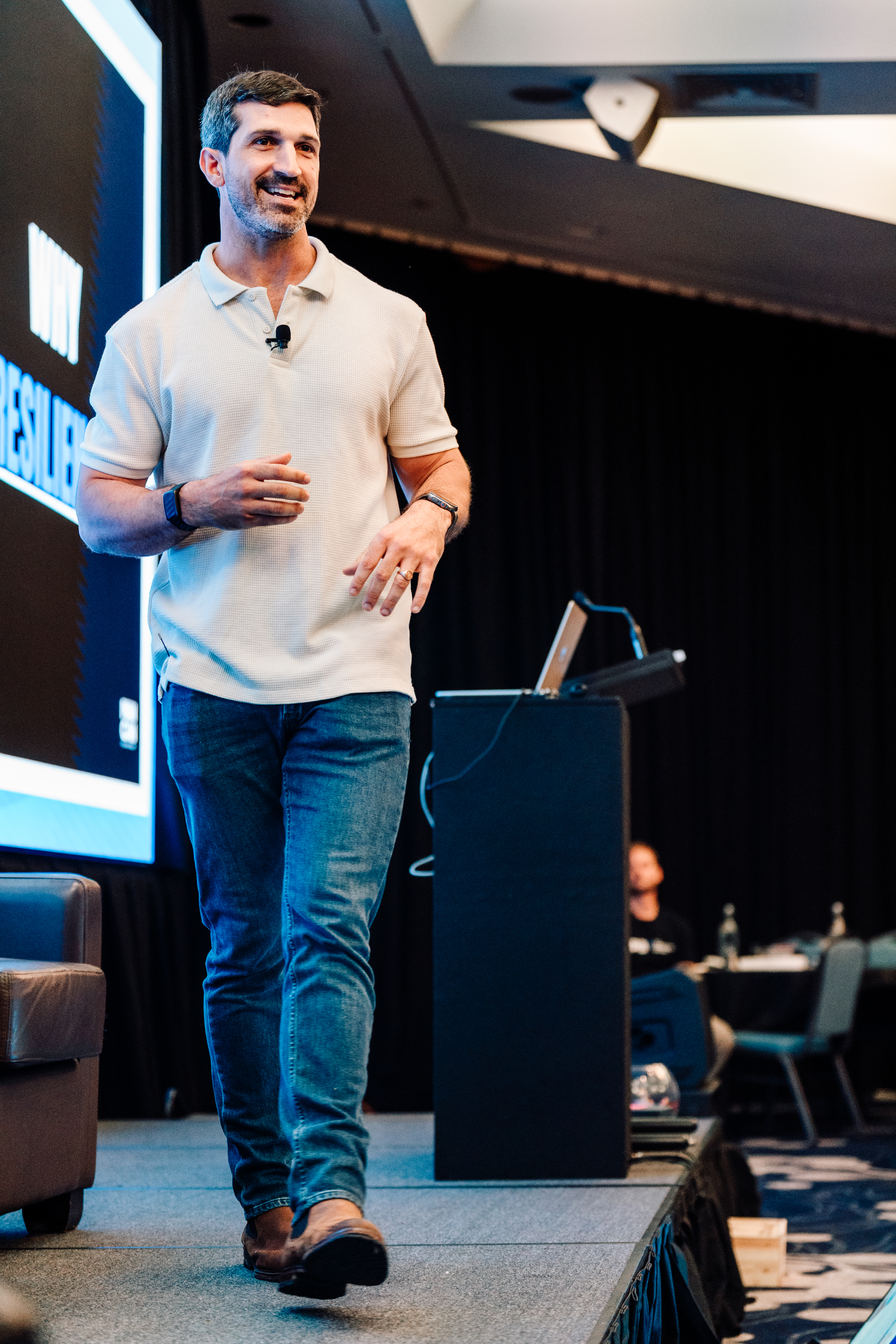
As a keynote speaker and Life Performance Coach, I've shared this framework with corporate teams, elite performers, and men who feel like they're holding everything together by a thread. It works because it's simple, repeatable, and built from real adversity, not theory.
Let me show you how it works.
First, Let's Get Honest About What Resilience Actually Is
Mental resilience isn't about never feeling stressed, ignoring your emotions, or pushing through everything with brute force. It's not pretending you're fine when you're not.
Real resilience is doing what you need to do, even when quitting feels like the easier option.
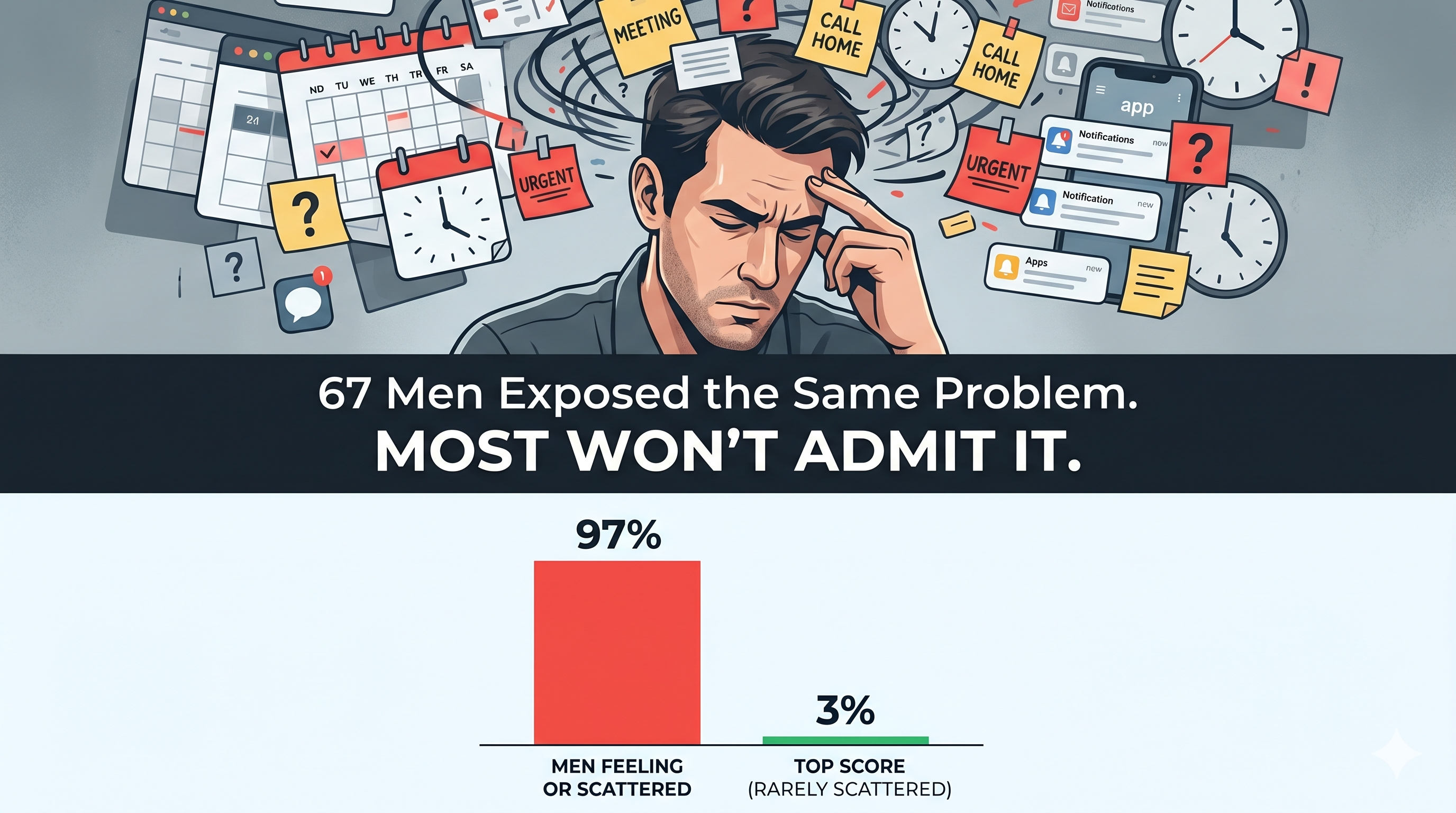
Here's what I've noticed after coaching over 1,200 men: most guys think they're resilient because they're good at suppressing. They push down their stress, ignore their anxiety, and soldier on. They mistake numbness for toughness.
Then one day, something breaks. A relationship ends. A business fails. A health scare hits. And suddenly, all that suppressed emotion comes flooding out at once.
That's not resilience. That's a pressure cooker waiting to explode.
The data confirms what I see in my coaching practice. Research shows that roughly half of Australian men will face mental health challenges at some point, and one in two have withdrawn socially rather than dealing with what's going on beneath the surface. Men are three times more likely to die by suicide than women, and a significant factor is the reluctance to seek help or build genuine coping systems.
This isn't a crisis of weakness. It's a crisis of strategy. Most men were never given a framework for handling hard things well.
That's why I built the Resilience Loop.
The Resilience Loop: A Framework Built From 58 Marathons
After running 58 marathons in 58 consecutive days across America and Australia, through injury, blizzards, emotional breakdowns, and minus-18-degree temperatures, I didn't walk away with a motivational poster. I walked away with a pattern.
Every time I survived a day I wanted to quit, the same three things got me through:
The Resilience Loop:
- Set a Goal, know your direction and what you won't sacrifice
- Own Your Choices, every decision is a vote for who you're becoming
- Stack Small Wins, compound interest for your character
This isn't linear. It's a cycle. You set a goal, make choices that move you forward, stack small wins that build belief, and then you're ready to set a bigger goal. Each loop strengthens you for the next one.
Think of it like training a muscle. One loop doesn't transform you. But hundreds of loops, repeated through pressure, doubt, and discomfort, build a man who can handle anything.
Let me walk you through each stage using the moments that nearly broke me.
Stage 1: Set a Goal (And Know What You Won't Sacrifice)
Resilience needs a target. Without a goal, you have nothing worth being resilient for.
Think of your goal like a lighthouse. When you're shuffling around a baseball field at minus 12 degrees, you can't see the shore. But you can see that light. It doesn't make the waves smaller. It just tells you which direction to point.
When I first committed to running 58 marathons, I did something most people skip when they set big goals. I didn't just ask, "What do I want to achieve?" I asked: "What am I NOT willing to sacrifice to achieve this?"
I was not prepared to lose my marriage. I was not prepared to make it a miserable experience for the people who came with me. I wanted it to be hard, but I also wanted it to be an adventure we'd remember for the right reasons.
Those anti-goals became just as important as the goal itself. They influenced every decision, from how I trained, to how I treated my team, to how I communicated with my wife Amy when things got dark.
What's the point of achieving something great if you destroy everything that matters along the way?
This is what I call the Clear Purpose pillar in my Life Performance Framework. A goal without boundaries becomes obsession. A goal with boundaries becomes direction.
How to Apply This
Your version of 58 doesn't have to be a marathon. It could be rebuilding your health after years of neglect. Starting a business. Repairing a relationship. Becoming the father your kids actually need.
Whatever it is, write down two things: what you're chasing, and what you refuse to sacrifice to get it. That combination is what separates a goal from a grind.
Stage 2: Own Your Choices (Every Decision Is a Vote)
A goal gives you direction. But choices determine whether you actually get there.
On day five, I woke up in West Wendover, Nevada. If you've never been there, picture a caravan park, a casino, and a baseball field in the middle of nowhere.
My ankles were the size of baseballs. Both of them. When I put my feet on the ground, a burning sensation shot up both shins. I hobbled to the showers, hoping warm water would help.
No amount of warm water was bringing movement back.
I walked to the baseball field and started shuffling laps. Fourteen minutes per kilometre. At that pace, the marathon would take around ten hours.
Then the voices started.
Lap fifteen: my mind started whispering, "You're an idiot."
Lap twenty: the whisper became a shout.
Lap twenty-five: the shout became a choir. Every voice saying the same thing, quit. "You're a nobody. You're a failure. You can't raise a hundred thousand dollars."
Lap after lap. In the cold. Shivering. Hurting.
Until something snapped inside me. Not a breakdown, a breakthrough.
"You chose to do this. No one forced you. You asked for this. You get to do this."
And that's when it hit me: every choice is a vote for the man you want to become.
I had two options in West Wendover.
Option one: Quit. Get warm. Eat pizza. But the consequences were immediate, call the sponsors and say I failed, call the charity and say the hundred thousand dollars wasn't happening, and put my head on the pillow knowing I didn't take the next step.
Option two: Keep going. Six more hours of freezing cold. Pain. Uncertainty. But the consequences were better, live to fight another day, keep the fundraising alive, and go to sleep knowing I moved one step closer to the man I'm trying to become.
I chose option two. Not because it felt good. Because the consequences of quitting felt worse.
This is the Calm Mind pillar at work. Resilience isn't about removing the noise in your head. It's about choosing your next action despite the noise.
How to Apply This
You face this same fork every day. Hit snooze or get up. Have the hard conversation or avoid it. Do the workout or scroll your phone.
None of those individual choices feel monumental. But stacked together, they're the difference between the man you are and the man you could be.
Start noticing your votes. Ask yourself: "Is this choice moving me toward or away from the man I want to become?" That single question changes everything.
Stage 3: Stack Small Wins (Compound Interest for Your Character)
Goals give direction. Choices move you forward. But small wins are how you survive the journey.
After West Wendover, I still had 52 marathons left. And my body was in pieces.
A few days later, my mate Etienne flew in from Paris. The next morning, he asked me a serious question: "Lachie, how far do you think you can run unbroken today?"
I looked at him like it was a stupid question. "Probably a kilometre or two."
He looked back and said, "Brilliant!"
I said, "Brilliant? If I run a kilometre, I still have 41K to go. How is that brilliant?"
He said: "Here's what we're going to do. You run one kilometre. We walk for five minutes. Run one kilometre. Walk five minutes. And we keep going until we finish."
Something about that strategy changed everything.
The first kilometre was the best I'd felt in days. Because I knew I could run one kilometre. And when the pain started building, I knew a break was only a couple hundred metres away. With 200 metres to go I'd ask, "How long?" And when he called time, I'd think, "Yes! How good is this!"
Three kilometres in, I did the maths. We were actually going faster than the day before, when I'd tried to grit it out alone.
That's when the third lesson of resilience hit me: small wins are compound interest for your character.
One kilometre doesn't complete a marathon. But string enough of them together and suddenly you're crossing the finish line wondering how you got there.
Small Wins Aren't Always Physical
On day 17, in Fort Wayne, Indiana, the temperature hit minus 16. Black ice everywhere. I found a reserve and started running, the first 16 kilometres felt brilliant.
Then Liam and the crew came to check on me. I jumped in the van to warm up, put my gloves in front of the heater. When I got back out to keep running, I realised I'd left my nutrition, my drink bottle, everything, in the van.
With seven kilometres to go, I was freezing, shivering, out of energy. I thought I was going to pass out.
I called them: "If you don't come back with my stuff, I'm not going to make this."
And in that moment, it hit me: I have to let these guys help me. Because if I fail here, we all fail. They've given up just as much as me to be here.
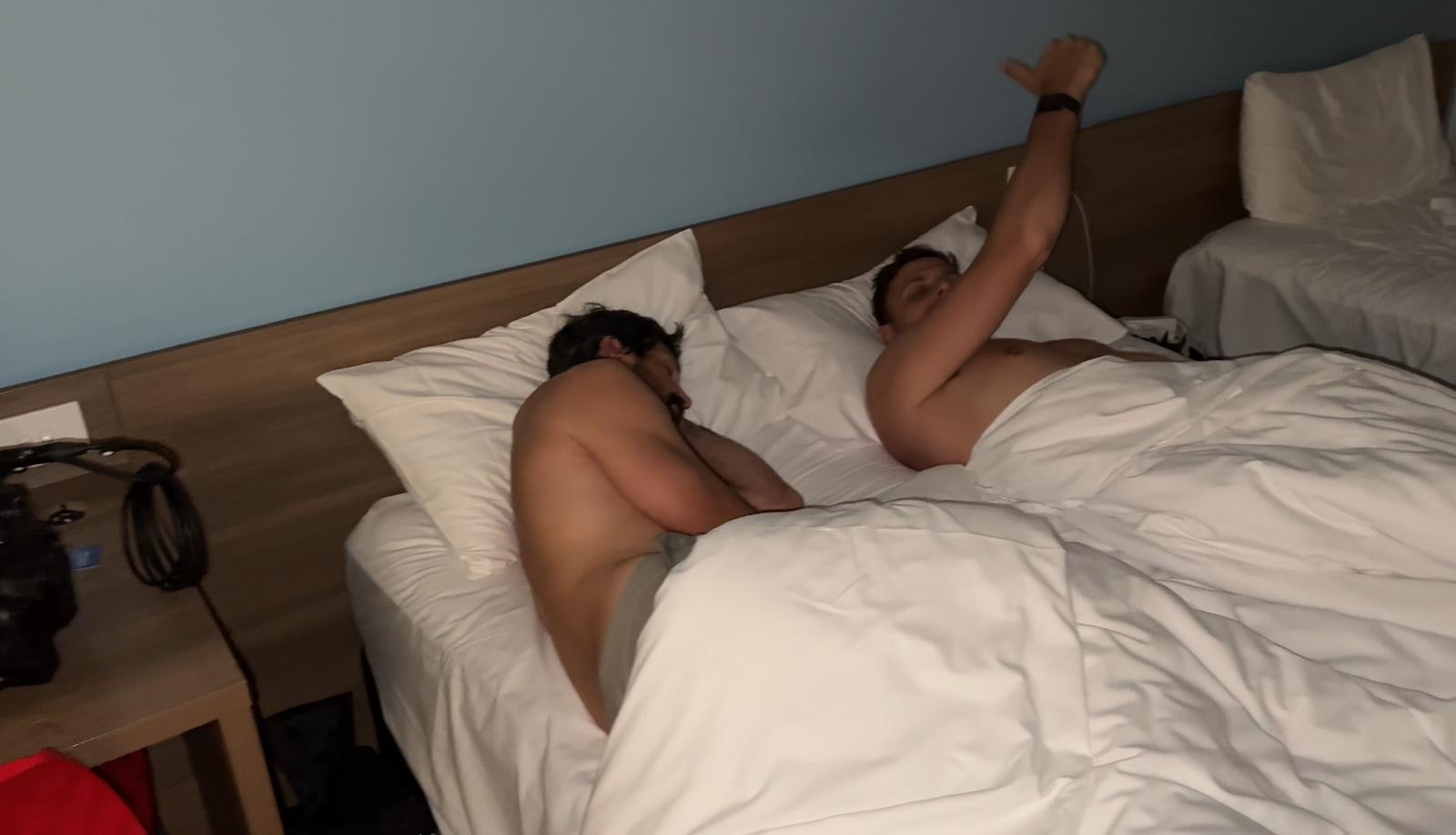
That night I did one of the hardest things on the entire trip. I said to the team: "Guys, I'm struggling. And I'm struggling to ask for help, which is even worse. But I need you to check that I've got everything before I head out."
You know what happened? That became a small win. Not just for me, for the whole team. Because now they felt truly part of it.
Learning to let go of control. Learning to ask for help. Those were small wins that compounded over time.
This is where the Strong Body and Confident Life pillars intersect. Your body needs support systems to perform. And your relationships, at home, at work, on your team, need vulnerability to grow.
How to Apply This
You don't need to run a marathon to stack small wins. You need to identify the smallest meaningful action and do it repeatedly.
One honest conversation instead of avoiding it. One workout when you'd rather skip. One meal that fuels you instead of sedates you. One boundary you actually hold.
Stack those long enough and you become the kind of man who does what he says he will do. And that's the ultimate form of self-respect.
The Resilience Killer Nobody Talks About
Before I wrap up, there's something important most resilience advice ignores.
The biggest threat to your resilience isn't external. It's not your job, your relationship, or your circumstances. It's your inner critic.
That voice telling you you're not good enough. That reminds you of every failure. That predicts disaster around every corner.
Most men don't even notice this voice because it's been there so long. It feels like truth. It's not.
I heard it at full volume in West Wendover. I hear it before every keynote I give. I heard it when we were going through IVF and I wondered if I'd ever become a father.
The inner critic never fully disappears. But you can turn down its volume. You can stop treating it like gospel and start treating it like background noise. That skill, recognising the voice without obeying it, might be the most important resilience tool you develop.
The Loop Never Stops
Here's what I want you to take away from this.
Building mental resilience isn't a one-time achievement. You don't complete the Resilience Loop once and unlock some permanent state of toughness.
It's a cycle you run through again and again. Set a goal. Own your choices. Stack small wins. Then set a bigger goal and start again.
Some days you'll feel unshakeable. Other days you'll feel like you're barely holding it together. Both are part of the process.
On marathon 58 in Brisbane, I asked the crew running with me if I could have the last five kilometres alone. I wanted to reflect. For 58 days and the 14 months before, everything I did from the moment I woke up was for this goal.
As I ran onto the Howard Smith Wharves boardwalk, I saw a line of hundreds of people. I was overwhelmed. Four million people had followed online, but when you see the faces behind the numbers, people who took time out of their Thursday afternoon to watch some bloke finish running, it meant more than I can put into words.
I ran straight to Amy. Hugged my family. And I cried.
Not because of the pain. Because I realised every moment I wanted to quit, every lap in the freezing cold, every doubt, those weren't obstacles. They were the training. They were the very things that built the Resilience Loop strong enough to carry me home.
And that's true for you too.
You don't get to skip the hard days. You go through them, and you grow through them.
Whatever your version of 58 is, go after it. Set the goal. Make the choice. Take the next small win.
The Resilience Loop is already in you. It's waiting behind your next hard choice.
Your Next Step
If you're serious about building resilience across your entire life, not just at work, not just in the gym, but everywhere, start with a clear picture of where you currently stand.
Take my free Own Your Week Scorecard. It takes five minutes and shows you exactly where you're strong and where you need work across all four pillars: Strong Body, Calm Mind, Clear Purpose, and Confident Life.
Once you know your baseline, you can start running the Resilience Loop with intention.
And if your organisation is looking to build resilience that actually sticks, not a one-day workshop that everyone forgets by Monday, get in touch about bringing this to your team.
About Lachlan Stuart
Lachlan Stuart is a keynote speaker, ultra-endurance athlete, and creator of the Life Performance Framework. He ran 58 marathons in 58 consecutive days, the first person to complete the challenge in winter, raising over $162,000 for mental health. He helps organisations and high-performing men build resilience that lasts through his Core 4 approach: Strong Body, Calm Mind, Clear Purpose, and Confident Life. Book Lachlan to speak.