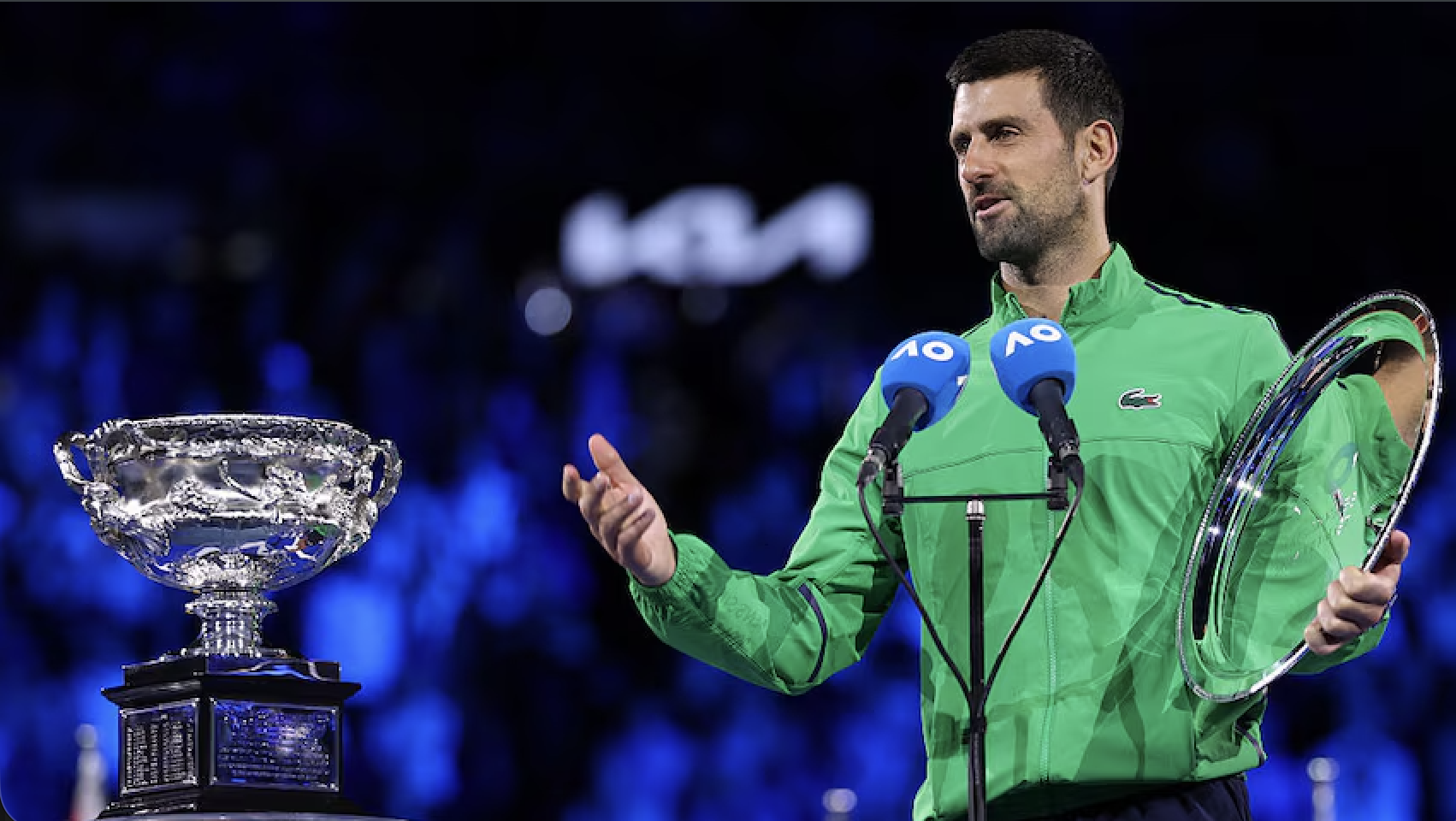
Novak Djokovic just made another Australian Open final at 38.
Let that sink in.
In a sport where players are supposed to peak in their mid-twenties, where the next generation is always faster, hungrier, and more athletic, a 38-year-old just went five sets against the world's best and earned his shot at a 25th Grand Slam title.
Most people watched that match and thought, "What a competitor." I watched it and thought about something I've been turning over in my mind for years: Why do some men extend their peak while others fade?
This isn't just about tennis. It's about you.
The Myth of Inevitable Decline
We're fed a story about ageing that goes something like this: your body breaks down, your edge dulls, and eventually you step aside for someone younger. It sounds reasonable. It feels inevitable. And it's mostly wrong.
Look at the evidence.
Cristiano Ronaldo is still scoring goals at 40, and talking about playing in his sixth World Cup. Lionel Messi just won an MLS Cup at 38 and is preparing to defend Argentina's World Cup title. Djokovic is reaching Grand Slam finals against opponents who were in primary school when he won his first major.
These aren't anomalies. They're proof of a different approach.
The conventional wisdom says age catches everyone. But these athletes aren't defying age, they're playing a different game entirely. They made decisions decades ago that are paying dividends now.
And here's the part that matters if you're not a professional athlete: the same principles apply to your career, your health, your energy, and your relevance.
What Djokovic Actually Does Differently
When people talk about Djokovic's longevity, they usually mention his flexibility or his plant-based diet. That's surface-level stuff. The real insight is deeper.
He never stopped learning.
Djokovic has worked with more coaches than almost any elite player in tennis history, far more than rivals like Rafael Nadal, who had the same coach (uncle Toni) for 27 years. Most people see frequent coaching changes as instability. I see it as relentless evolution.
At 38, with 24 Grand Slam titles, he's still humble enough to seek new perspectives. Still willing to change what's working in pursuit of what might work better. He hired Andy Murray, a former rival, as his coach. That takes ego out of the equation entirely.
He treats recovery like a skill, not an afterthought.
In a press conference at the 2023 French Open, Djokovic said something that stuck with me: sleep is "more important than any other recovery routine." He aims for eight to nine hours a night and has built his entire schedule around protecting that time.
He manages his tournament load strategically. He uses breathwork, meditation, ice baths, and sauna protocols. He's not just training hard, he's recovering hard. Most athletes (and most high-performing professionals) get the first part right and completely neglect the second.
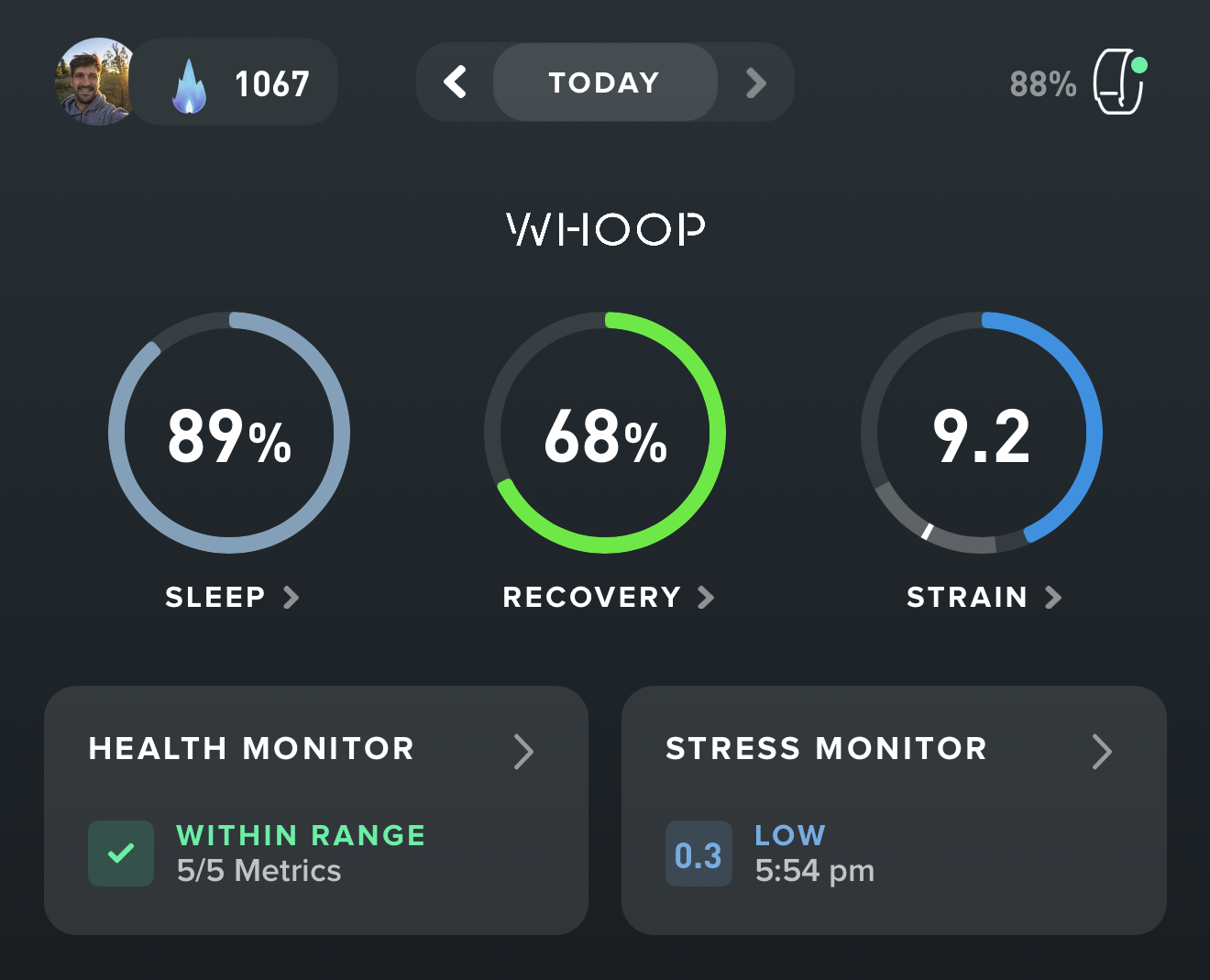
If you want to understand what recovery metrics actually matter, it starts with tracking the right numbers, not just hoping effort is enough.
He started decades ago.
This is the part people miss entirely. Djokovic's performance at 38 wasn't built in his thirties. It was built in his teens and twenties through thousands of small decisions that compounded over time.
The gluten-free diet. The flexibility work. The mental training. The sleep hygiene. None of it was an emergency intervention when he started feeling old. It was a long-term investment that's now paying returns.
The Real Lesson: What You Do Today Sets You Up for Tomorrow
Here's the belief I want to challenge: You cannot wake up at 50, realise the end is near, and suddenly start preparing for longevity.
By then, you're playing catch-up. You're reacting instead of building. You're trying to reverse decades of accumulated decisions that were silently shaping your future.
The men I coach, high-performing professionals in their 30s and 40s, often come to me feeling like they've already missed something. They've built careers, achieved external success, but somewhere along the way they stopped investing in themselves. Their health slipped. Their energy drained. Their sense of purpose got buried under obligations.
They're not broken. They're just behind on a timeline they didn't know existed.
The good news? It's not too late. But it does require a fundamental shift in how you think about performance and longevity.
The Effort-to-Skill Transition
Here's a framework I use with my clients that explains what Djokovic and these elite athletes understand intuitively.
Early in your career, you compensate for lack of skill with effort.
You grind. You say yes to everything. You work longer hours than anyone else because that's the only advantage you have. You're learning on the job, making mistakes, and figuring it out through sheer volume.
This is necessary. There's no shortcut around it.
But as you build experience, the game changes.
The goal isn't to keep grinding forever. The goal is to transition from effort-dependent to skill-dependent. You stop working hard at everything and start working smart on what matters. You become selective. Your expertise compounds. You get better results with less wasted energy.
Think about it like this:
- Early career: High effort + Low skill = Adequate results
- Peak career: Moderate effort + High skill = Exceptional results
The men who fade are the ones who never make this transition. They keep grinding at the same pace, burning through their reserves, until there's nothing left.
The men who extend their peak, like Djokovic, learn to leverage their accumulated skill and experience. They pick their battles. They recover strategically. They trust the foundation they've built.
The Core 4 Connection
When I look at Djokovic's approach through my Core 4 framework, I see all four pillars working together:
Strong Body: He's religious about sleep, recovery, nutrition, and physical maintenance. His body isn't just surviving at 38, it's performing.
Calm Mind: The breathwork, meditation, and mental training aren't optional extras. They're core to his ability to perform under pressure and regulate his nervous system through five-set matches.
Clear Purpose: At 24 Grand Slams, he could retire as the greatest of all time. Instead, he's chasing 25. He knows exactly why he's still competing.
Confident Life: Despite constant criticism, despite being the least popular of the "Big Three," he shows up with complete self-belief. He doesn't need external validation to know his worth.
This isn't coincidence. Longevity requires all four pillars. You can't just have a strong body with a scattered mind. You can't have clear purpose but neglected health. The system only works when it works together.
Your mental performance depends on your physical health, they're not separate systems.
My Own 10-Year Bet
Ten years ago, I made a decision.
I was working as a carpenter, driving Uber on the side, trying to figure out what I actually wanted from life. On paper, I was going nowhere. But in my head, I was crystal clear on three things I wanted: flexibility, financial control, and adventures.
Not someday. Not when I retire. As a way of life.
That decision, made when I had nothing to show for it, led to everything that followed. Building a coaching business on my own terms. Running 58 marathons in 58 consecutive days from Alaska to Brisbane. Co-hosting a podcast with my wife. Designing a life where I choose what I say yes to.
None of that happened by accident. It happened because I started preparing for the life I wanted before I needed it.
I didn't wait until I was successful to invest in my health. I didn't wait until I was established to build systems and standards. I didn't wait until I felt ready to take action.
I started before I was ready, and I let the results compound.
Standards, Not Motivation
Here's the final piece of the puzzle.
Djokovic isn't competing at 38 because he's motivated every day. Anyone who's trained at an elite level knows that motivation is unreliable. It comes and goes. It's weather, not climate.
He's competing because he built standards that don't negotiate with how he feels.
When the alarm goes off, he gets up. When the recovery protocol calls for ice baths, he gets in. When his body needs sleep, he prioritises it over everything else. Not because he feels like it. Because that's the standard he's set.
This is what separates the men who extend their peak from the ones who fade. It's not genetics. It's not luck. It's the accumulation of thousands of small decisions, made consistently over decades, that compound into extraordinary results.
Motivation gets you started. Standards keep you going when motivation disappears.
The hidden cost of selective standards is that success built on inconsistency always cracks eventually.
Your Move
So here's my question for you:
What decision could you make today that your 50-year-old self will thank you for?
Maybe it's finally prioritising sleep instead of treating it as negotiable. Maybe it's investing in your physical health before your body forces you to. Maybe it's getting clear on your purpose instead of drifting through another decade.
Whatever it is, start now. Not because you feel ready. Not because the timing is perfect. But because what you do today is building the foundation for who you'll be in ten, twenty, thirty years.
Djokovic didn't become a Grand Slam finalist at 38 by accident. Neither will you.
"The compound interest of discipline is the only investment that never loses value."
Ready to Build Your Longevity Playbook?
If you're a high-performing man who's built external success but feels like something's missing, I created a free Own Your Week Scorecard to help you assess where you stand across the Core 4.
It takes five minutes and might be the clarity you need to start building differently.