Here's something most successful men won't admit: they know alcohol is holding them back, but they keep drinking anyway.
Not because they're addicted. Not because they need it. But because of social pressure, habit, and the uncomfortable reality that giving up drinking forces you to confront things you've been numbing.
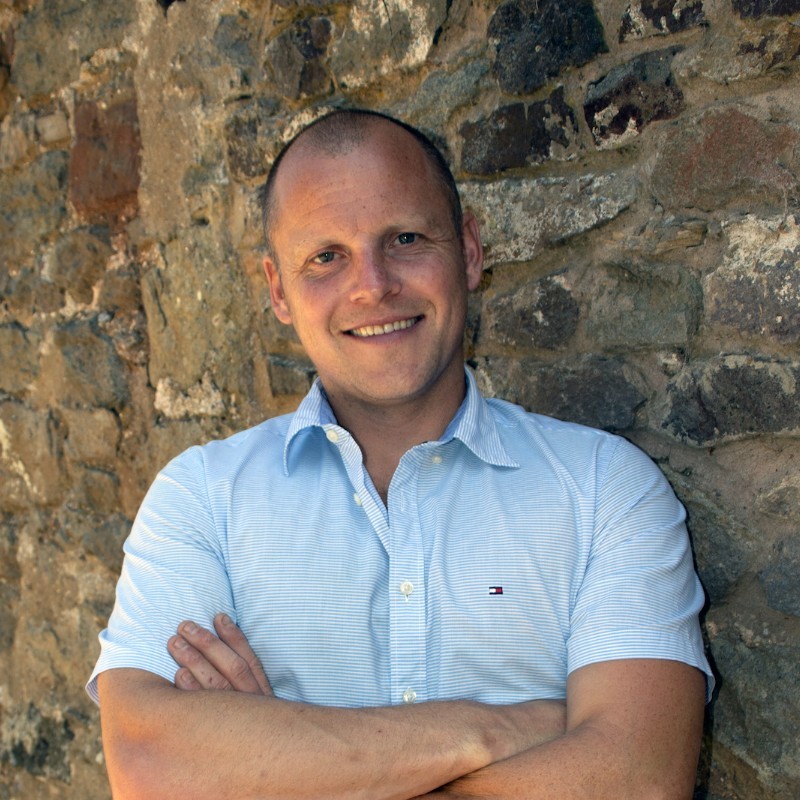
I sat down with Ruari Fairbairns, founder of One Year No Beer, and the conversation completely reframed how I think about alcohol's role in high performance. This isn't an anti-drinking lecture. It's a performance conversation.
The Data Doesn't Lie
I track my biometrics with a WHOOP, and the data is undeniable. Whenever I drink alcohol, there's a huge spike in my resting heart rate. It goes from around 39 beats per minute while sleeping to significantly elevated. Ruari's community tracks similar data with Oura rings and other wearables.
Here's the science Ruari broke down: alcohol increases cortisol production, which puts your body into fight or flight mode all night while you're sleeping. You're not recovering. You're surviving. Your body isn't producing the cells it needs to repair and grow. Your sleep quality tanks even if you're technically unconscious for eight hours.
The mental clarity and energy that comes from removing alcohol is, in Ruari's words, phenomenal. And this isn't about people who drink every day. This is about the guy who has a few beers on Friday night and wonders why he feels flat on Saturday and Sunday.
Why Smart People Keep Drinking
What fascinated me about Ruari's story is that he didn't have what most people would call a drinking problem. He was successful. Functioning. Performing well by most external measures.
But he asked himself a question that changed everything: if alcohol is having this effect on my body, my sleep, my energy, my focus, why am I still choosing it?
The answer, for most high-performing men, comes down to two things.
First, social pressure. Ruari was honest about this: one of the reasons he'd drink at social functions was social anxiety. He felt uncomfortable, and alcohol was the fastest way to take the edge off. But here's the challenge he posed: why am I feeling uncomfortable? What conversation am I avoiding having with myself about that discomfort?
Second, identity. When your social life, your business relationships, and your idea of relaxation are all built around alcohol, removing it feels like removing a part of who you are. That's exactly why it's worth examining.
The One Year No Beer Model
Ruari launched One Year No Beer after seeing the same pattern play out hundreds of times: people could do a short break from alcohol, a Dry July or a Sober October, and they'd feel amazing. But they'd go right back.
The insight was that real change requires long enough to build new neural pathways, new social connections, and new habits. A month isn't enough. The people who release dopamine through sport, connection, and achievement instead of alcohol build something sustainable.
What Ruari found was that the people who thrived weren't just removing alcohol. They were replacing it. They were finding other ways to be social, to celebrate, to decompress. They were building connections with other successful people who weren't choosing to drink.
My Own 12-Month Challenge
I set a personal goal to go 12 months without alcohol. Not because I had a bad relationship with it. I rarely drink anyway. But I wanted to test myself and remove even the occasional drink to see what the compounding effect would be over a full year.
The exact reason I'm doing the 12 months is because the mental clarity and energy I experienced even from reducing my already minimal intake was noticeable. If the data from my WHOOP shows that clear of an impact from a few drinks, imagine what a full year of zero alcohol does to your baseline performance.
This connects to my principle of standards not motivation. I'm not motivated to not drink. I've set a standard that for 12 months, I don't. It's not a daily decision. It's a decision I made once.
The Uncomfortable Question
If you look at the areas where you know you could be performing better, whether that's your sleep, your energy, your mental clarity, your relationships, or your body composition, and alcohol is a factor, what are you going to do about it?
You don't have to quit forever. But you should be honest about the trade-off. Every drink is a choice. And high performers make choices based on data, not on what's socially convenient.
Take a 90-day break. Track your sleep. Track your energy. Track your mood. Let the data tell you whether alcohol is helping or hurting your performance.
Because the men I coach who perform at the highest level across their health, relationships, purpose, and career, they're making decisions that compound in their favour. And for most of them, that means rethinking their relationship with alcohol entirely.
If you want to assess where you stand across the four pillars that matter most, take the free Own Your Week Scorecard and find out where your biggest opportunity for growth is.
For more conversations like this, check out the Man That Can podcast.